Look where materials meet.
Water against stone. Plaster against shadow. Boundaries often reveal texture more clearly than the middle of a surface. Start there, then decide how much of the surrounding space belongs in the frame.
A visual journal / Two imagined places
Studies of light, texture, and quiet places. An AI-generated visual journal about the details that make us pause.
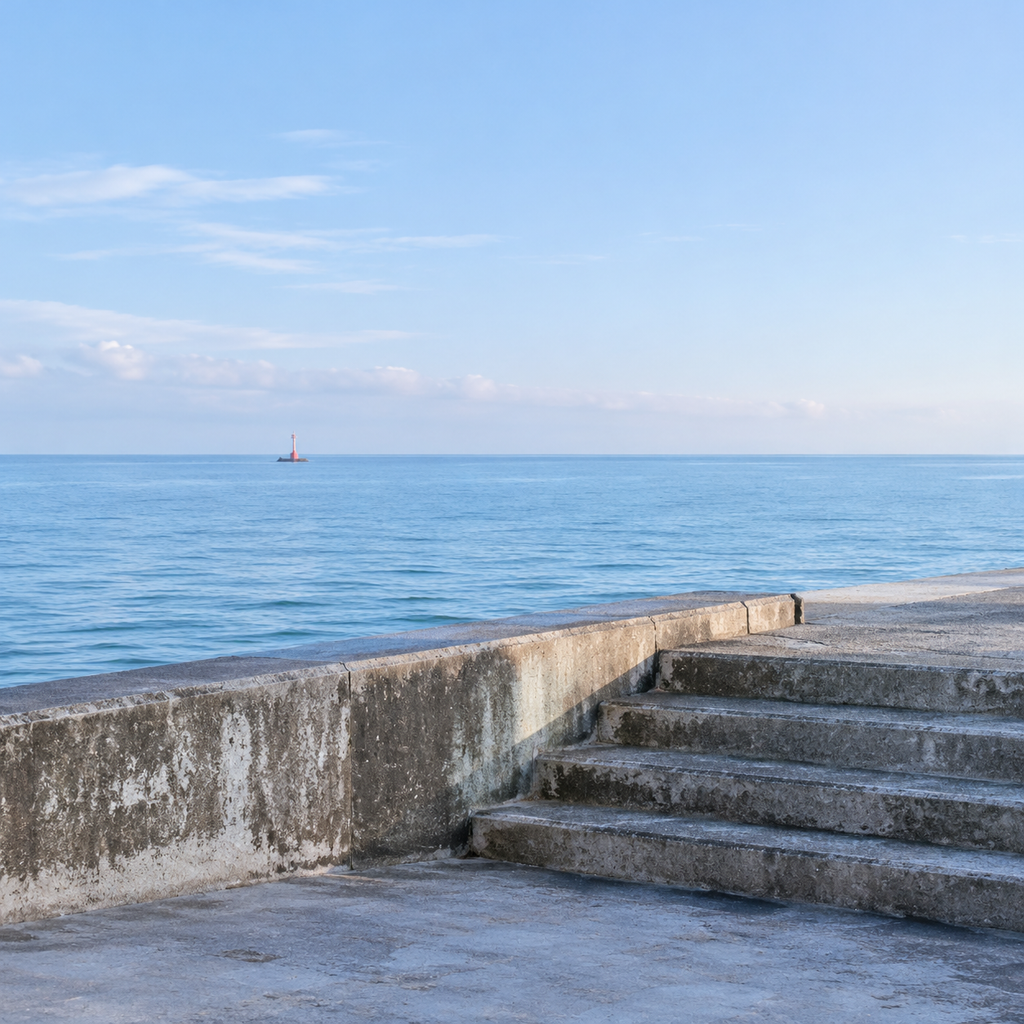
Blue, grey, a little red
The sea takes up very little of the story when a concrete edge becomes the foreground. Rough surfaces hold the light differently from water: one breaks it into small interruptions, the other stretches it into a quiet field.
The distant red marker gives the eye somewhere to rest. Its small scale matters. A stronger color does not need a larger space to change the balance of an image.
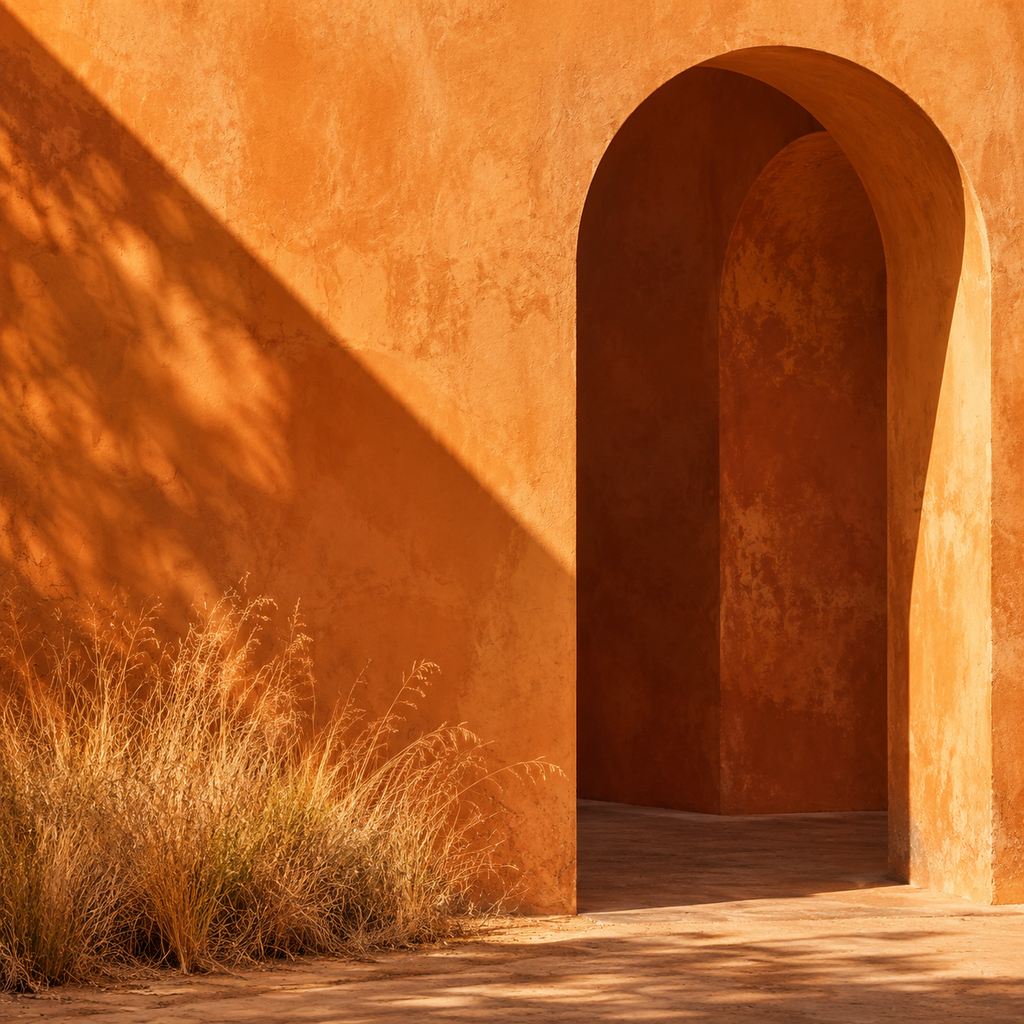
A simple wall can contain two kinds of architecture: the part that is built, and the part the sun draws across it. Here, a diagonal shadow interrupts the curve of the arch without hiding its shape.
Dry grasses soften the meeting of wall and ground. A small, irregular detail helps the larger geometry feel less certain, and more interesting.
Notes on looking ↓Water against stone. Plaster against shadow. Boundaries often reveal texture more clearly than the middle of a surface. Start there, then decide how much of the surrounding space belongs in the frame.
A restrained palette makes a quiet color difference easier to see. Look for a single detail that can guide the eye, then reduce the distractions around it.
Light shifts the shape of a place before anything in it moves. Compare the same scene at different times, paying attention to the direction and softness of the shadows.
The two images in this journal were generated with AI as studies of photographic composition. They do not document real journeys or claim to show particular locations. The accompanying observations explore their light, texture, and visual balance.
A small collection can be enough: two places, two kinds of light, and time to look carefully.